














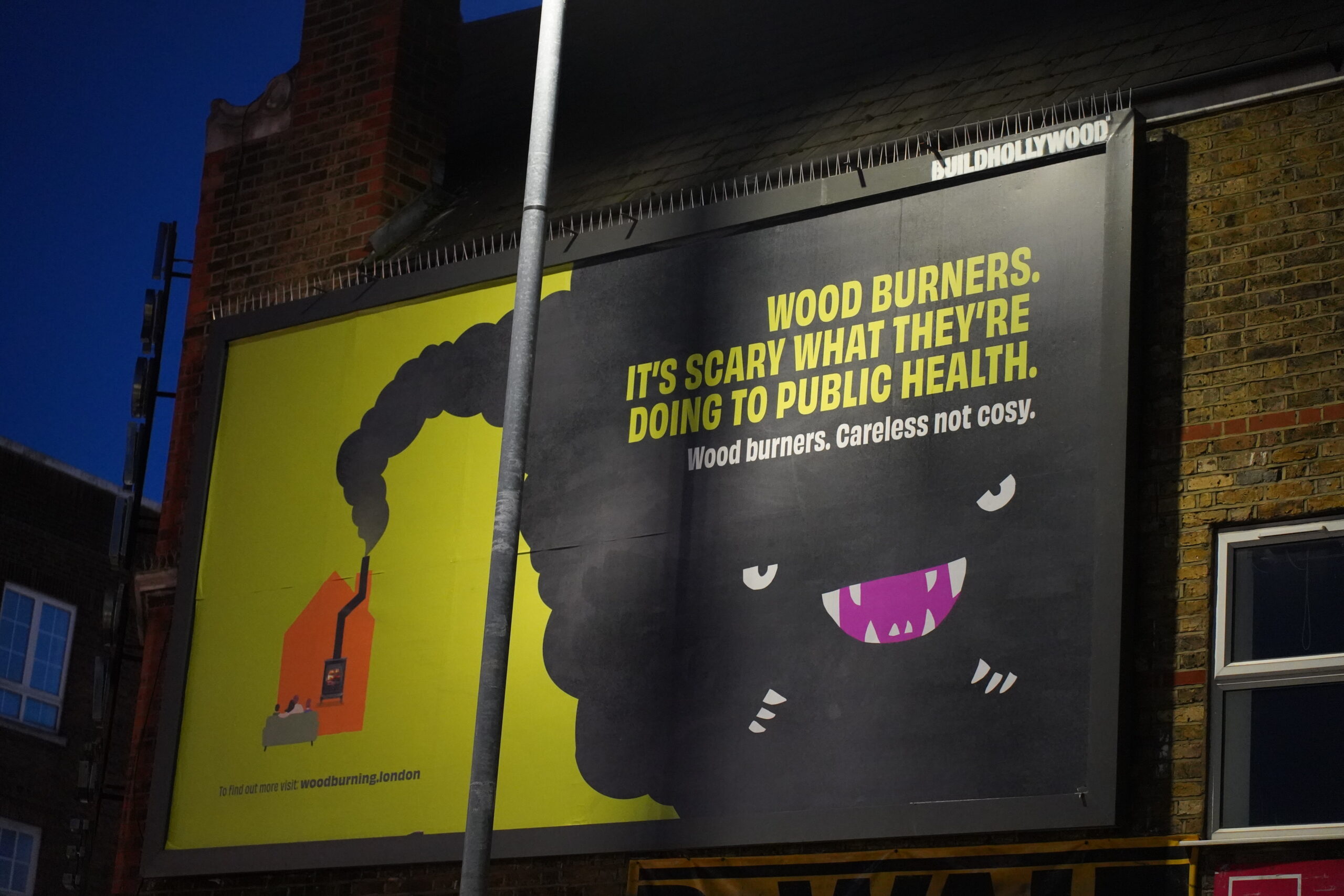
Councils across England are being threatened with legal action by the stove industry for running public health campaigns warning about the dangers of wood burning, a BMJ investigation has found.
Freedom of information requests sent to the 50 local authorities with the highest concentration of wood burning stoves revealed that nearly a third had faced pressure from the Stove Industry Association (SIA). Tactics included letters threatening legal action, press releases promoting the supposed benefits of wood burning and leaflets claiming stoves could lower blood pressure and reduce stress.
Eight London borough – Croydon, Haringey, Islington, Lewisham, Merton, Richmond, Southwark and Wandsworth – were threatened with legal action in late 2023 over a joint campaign that described wood burners as ‘careless not cosy.’ The SIA argued the flyers breached advertising codes and explored options for legal action under unfair trading laws.
Although no legal action materialised, the threats have had a chilling effect. Tom Parkes, air quality programme manager for Camden Council, which leads the London Wood Burning Project, said: ‘It’s had quite a detrimental effect on local authorities’ confidence. There’s a degree of worry about what happens if we are challenged, even if we’re confident that the science backs up what we’re saying.’
Brighton and Hove City Council also faced pressure over its ‘cosy killer’ campaign after a local stove business complained to the Advertising Standards Authority (ASA). The council relaunched the campaign this winter, still making the claim that particulate pollution is linked to one in 20 deaths… and a further complaint has been filed.
Three councils – Dudley, Elmbridge and Rushmoor – were sent leaflets claiming wood burning provides ‘health and wellbeing benefits,’ including lowering blood pressure and reducing anxiety. The SIA also cited an unpublished literature review it had funded, claiming ‘no scientific evidence’ for adverse health effects from modern stoves – though the review itself noted data was ‘extremely limited.’
Larissa Lockwood of Global Action Plan said: ‘I’m shocked. I’ve actually never heard of anything like this – industry lobbying public health servants to ignore a serious public health issue and go against medical advice.’
The concerns come as government data shows domestic burning is a major source of PM2.5 pollution, with wood burning responsible for around half of emissions from home fires.
England’s chief medical officer, Chris Whitty told The BMJ: ‘Air pollution is an extremely important, solvable health problem that leads to many diseases, including asthma in children, cancers, heart disease, and stroke. In urban areas, high concentrations of medically vulnerable people and high concentration of solid fuel burning can combine. The growth of wood burning stoves in urban areas now contributes a significant and growing proportion of air pollution and in some places is reversing many decades of progress.’
The SIA said it had sought to ensure messaging was ‘fair and balanced’ and that its members had worked to drive down emissions through improved technology. But with 19 of 50 councils having run no public health campaign on wood burning in the past five years, campaigners warn the industry’s tactics are succeeding in silencing vital health messaging.
An SIA spokesperson said: ‘There were some campaigns by local authorities that we and our members felt were not balanced and could, in our opinion, be seen as scaremongering the public. It was these that we challenged. That action was not to oppose public health objectives but to try to seek to ensure that the messaging used was fair and balanced.’
Laura Horsfall of the Institute of Health Informatics – who will be speaking at our Northern Air Quality Conference in June – said: ‘We need clearer and more honest public health messaging. Wood burning is often marketed as natural, cosy, or environmentally friendly. There’s also a need for greater awareness that even ‘eco design’ stoves are not pollution free.’
A Defra spokesperson said: ‘Dirty air robs people of their health and costs our NHS millions each year. We’ve set new ambitious targets to cut air pollution by a third by 2030, including the public’s exposure to fine particulate matter – the pollutant most harmful to human health.
‘To help reach this target, we are planning stricter limits on newly purchased stoves and health labels for fuels, as we strive to protect public health and the environment.’
Leave a Reply