















Tim Williamson, Technical Director at Air Quality Consultants Ltd asks how the Environment Act has benefitted our air quality in the three decades since it came into force.
In June 1995, the Environment Act passed into law, opening the current phase of environmental pollution control in the UK. It created the Environment Agency (EA) and Scottish Environmental Protection Agency (SEPA) and kicked off Local Air Quality Management (LAQM), among other provisions (such as strengthening the environmental role of National Parks).
The Environmental Protection Act 1990 had introduced integrated pollution control, i.e. the need to apply for, and comply with, a permit to operate a potentially polluting industrial process, and the system of offences and responsibilities relating to water pollution. However, these were divided between two different agencies: HMIP and the National Rivers Authority respectively. The creation of the Environment Agency and SEPA streamlined and unified the regulatory process; an “environment agency” of some form is now found in most, if not all, developed countries (although the US EPA preceded EA and SEPA by 25 years).
The passing of the Environment Act 1995 also coincided with the start of my career. In my first job, I was involved with one of the LAQM pilot studies, in the West Midlands In my next, at the National Society for Clean Air (NSCA), I helped create some of the early guidance around Air Quality Management Areas and action plans. My career has focused mainly on air pollution, and it is those aspects of the Environment Act that I will consider here.
A lot has changed in 30 years; 1995 was the year the internet was fully privatised, and Amazon sold its first book. In terms of air pollution, in 1995, ambient carbon monoxide (CO) was considered a priority pollutant. The annual mean concentration at London Cromwell Road was 2.1 mg/m3, and 2.3 mg/m3 at Bristol Old Market. Variations in CO concentrations could be used to assess traffic volumes, so well did they correlate. The Euro 1 emissions standard for cars had only been in force for 3 years and most vehicles had virtually no emission controls at all. Now, CO levels are so low that it is functionally unmeasurable in most locations. On still, sunny days in most UK (and European and American) cities in 1995, an orange haze would form from unreacted nitrogen oxide, with the highest concentrations of nitrogen dioxide (NO2) often found in the suburbs. Odd to think now but, PM10 and PM2.5 were not a significant consideration back then, with the results from the groundbreaking Harvard six cities study yet to impact on air pollution policy. In 1995, the focus was almost wholly on short term impacts of air pollution, not surprising given that you could smell it at busy roadside locations.
Has it worked?
Evaluating the success of the EA 1995 is difficult, given that it came into force just prior to the European Union’s system of air quality limit values – almost, but not quite the same as the UK air quality objectives – and the EU wide permitting system we now know as the Industrial Emissions Directive (IED). Added to this over time were the series of increasingly stringent Euro standards, plus a raft of other EU policy measures which have been transposed into UK law. In air pollution terms, the EU and EA 1995 measures were driving towards the same place, although the UK kept both systems in operation (limit values at national level, UK objectives for LAQM), creating an oddly parallel process which persists even now.
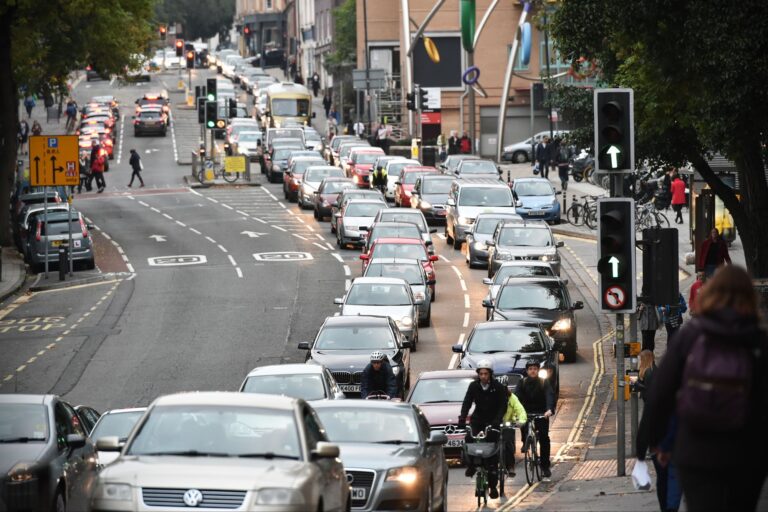
What is certainly true is that the EA 1995 helped reveal the magnitude of the UK’s air quality challenge. The original architects of the LAQM process assumed that there would be no more than a dozen or so Air Quality Management Areas (declared by local authorities where there is a breach, or risk of a breach, of the UK objectives) across England, and only located in the major cities. However, once “review and assessment” got fully underway, hundreds of AQMAs were identified, as every small town with a narrow high street or congested centre found levels of NO2 (and it was almost always NO2) well above the national targets.
The degree to which the EA 1995, through LAQM and the duty on the Government to publish an Air Quality Strategy helped to solve the problem is more debatable. Both the UK Government, via the legally mandated Air Quality Strategy, and local authorities became very adept in defining, in precise terms, what the problem was. Actual action to reduce the problem, certainly outside London, was less obvious beyond the implementation of EU-wide measures (Euro standards, fuel quality standards, BAT reference notes, etc). The UK system of Clean Air Zones outside of London (low emission zones by another name) only came about as a result of threatened legal action by the European Commission, and actual legal action by the pressure group Client Earth. The original London Low Emission Zone was resisted by the central Government of the day, as has virtually every expansion or tightening of the LEZ since.
That said, without the EA 1995, it is doubtful that air quality would be a material consideration in land use planning decisions, as air quality would probably not be on the radar of most local authorities without LAQM. Nor would there be as much accessible information about air quality via local authority monitoring (albeit often wrapped up in technical jargon which brings “accessible” into question).
Nevertheless, the lack of powers to deal with air quality has often been cited as a failure both of LAQM and the national Strategies. There are a number of potential reasons for this. Responsibility for the environment, including air quality, in UK Government is held primarily by Defra, a department otherwise tasked with food and rural affairs. This can lead to “the environment” being seen as synonymous with “the countryside”, whereas air quality is more of an urban, and public health, issue (accepting the ecosystems impacts of nitrogen and sulphur deposition). The main sources of air pollution – industry, transport, energy production – and the impacts of air pollution – public health – all sit in other Departments with their own priorities. Defra tends to be seen as a “problem” department, e.g. flooding, foot and mouth disease, fights with the EU about fish stocks, and it struggles to get traction for the measures it needs. Moreover, responsibility for local authorities and their budgets, sits with yet another Department and so “whose budget pays for these new powers” becomes an intractable argument. This was exacerbated (until Brexit) by the parallel system referred to earlier, with central Government being more concerned with meeting the EU limit values and less interested in local breaches of the UK objectives, the former having a legal force the latter lacked.
So where are we now?
The big success stories have been the Euro standards to control vehicle emissions and industrial emissions permitting to control industrial and power generation emissions. In particular Euro6/VI has finally delivered on promised reductions in road vehicle emissions, after facing significant scrutiny and reform following the so-called ‘diesel-gate’ and the shortcomings of Euro 5. Added to this is the ability of local authorities to leverage the Euro standards in the form of low emission or ‘clean air’ zones. Results for London and elsewhere have shown that step changes in air pollution are possible with strong interventions (although there is an argument that this could have happened sooner). Industrial emission control too is greatly improved, with the system of tightening standards through updates to “BAT” showing its worth over time, applying to most of the industrial and power generation sectors.
This means that many of the concerns of 30 years ago have been addressed, or at least restricted. With NO2 concentrations finally moving in the right direction (although there is still a way to go before we can declare success), focus is moving towards PM2.5 and ammonia. This brings two “difficult” sources onto centre stage. Ammonia is almost entirely an agricultural issue, the regulation of which is politically and technically complex. The European country most advanced on this is the Netherlands, and the political fallout has been plain to see with extensive protests from the farming community, and evidence that such discontent is being used by populist politicians to generate support.
Leave a Reply