








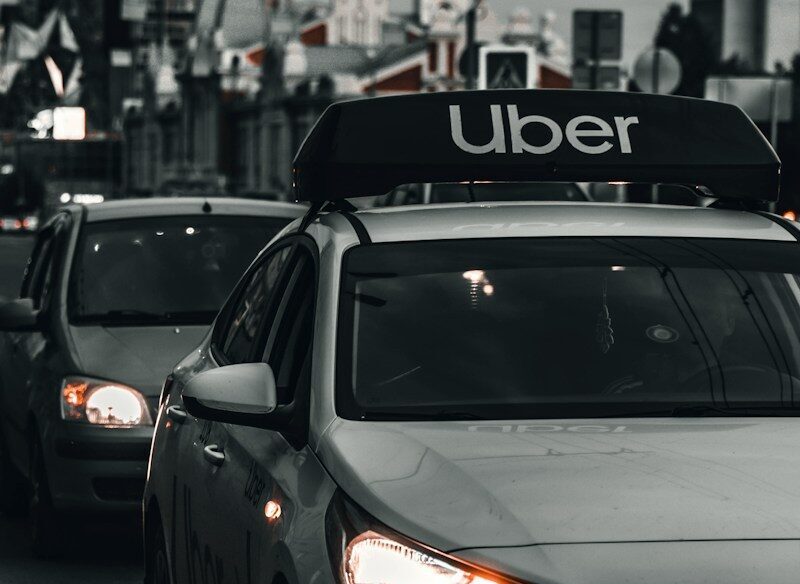
British Uber drivers having to pursue an alleged unfair pay claim through the Dutch courts highlights how difficult it is for workers to challenge powerful technology companies in the UK, a think tank has warned.
The Institute for Public Policy Research (IPPR) says restrictions on collective legal action, limits on charities bringing public interest cases and the risk of high legal costs leave workers and consumers struggling to enforce their rights.
Its report focuses on a Dutch lawsuit involving UK Uber drivers, which challenges the company’s alleged use of personal data to determine drivers’ pay. Uber disputes the allegations.
The IPPR says Dutch law allows non-profit organisations to bring collective cases on behalf of affected people, with limited exposure to legal costs. In the UK, equivalent action is harder to pursue, while individuals are generally required to actively join collective claims.
The case comes amid concerns about the impact of algorithmic pay systems on drivers. Previous research cited in the press release found that Uber’s system had made earnings less predictable and widened pay inequality.
The think tank argues the problem extends beyond workers. It points to consumers subjected to invasive profiling and targeted gambling advertising, as well as sexualised images allegedly generated without consent.
Labour MP Jess Asato is suing Musk’s company xAI after sexualised images of her were generated without her consent. The company has yet to file a defence, according to the IPPR.
She said: ‘AI tools such as Grok have made it possible to create deepfakes images of real people without their consent at the touch of a button. Grok’s ability to do this is a design choice made by SpaceX Super Intelligence; it is AI designed without the safety of women and children in mind.
‘In my case, we contend that those responsible for Grok misused my data and broke UK law. No one is above the law. No matter how rich or powerful they are.’
The report calls for charities and non-governmental organisations to be allowed to bring public interest cases without individual authorisation, and for opt-out collective actions to be extended to areas including workers’ rights. It also recommends capping legal costs and changing litigation funding rules to make claims more affordable.
The government is already considering reforms to consumer class actions. But the IPPR warns that changes must also cover workers and others harmed by technology.
Swee Leng Harris, the report’s author, said: ‘It’s absurd that Uber drivers in the UK are represented in a Dutch lawsuit while UK law makes similar cases much harder.
‘From workers’ pay to harmful AI, ordinary people face huge barriers to challenging powerful tech companies. Rights mean little if people cannot enforce them. The government needs joined-up reforms so workers and consumers can hold tech giants accountable.’
Abdurzak Hadi, an Uber driver involved in the Dutch case, used the same word to descdribe the process: ‘It’s absurd that we have to go to another country to challenge what we believe is unfair pay. Drivers should be able to fight for their rights here in the UK.
‘Taking on a company like Uber in court also costs huge amounts of money, far more than most drivers I know can afford. We deserve justice, but right now it feels like justice is something you have to buy. That needs to change.’
Photo: Viktor Avdeev
Leave a Reply