














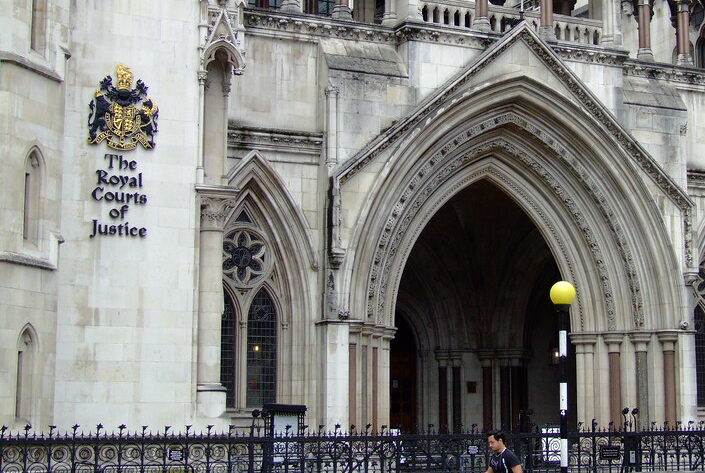
A disabled Somerset resident has been granted permission to take the county council to the High Court, arguing its council tax reduction scheme unlawfully penalises people on Universal Credit, particularly those with disabilities.
Andy Mitchell, a Taunton resident who is unable to work due to multiple physical and mental health conditions, used to pay no council tax under Somerset Council’s old rules. However, after being moved from ‘legacy’ benefits to Universal Credit, his support was slashed. He now faces an annual bill of over £1,100, receiving a reduction of just £2 per week, despite his income and needs remaining unchanged.
The judicial review, brought by law firm Leigh Day, argues that the scheme is structurally flawed and discriminatory. Under Somerset’s rules, all income from legacy benefits is disregarded when calculating council tax relief.
In contrast, almost all elements of Universal Credit – including the disability component, which is intended to meet extra living costs – are counted as ‘income’. This means disabled people receiving Universal Credit are assessed as having more “spare” money and are required to pay more council tax than non-disabled people on comparable incomes, or those still on legacy benefits.
The High Court has now granted permission for the case to proceed on all grounds. The court agreed it was arguable that the scheme is discriminatory, in breach of the Public Sector Equality Duty, and irrational. The challenge claims it is arbitrary to treat two people with identical financial needs differently based solely on whether they receive legacy benefits or Universal Credit.
The case also criticises the council’s reliance on a discretionary hardship fund to mitigate the scheme’s flaws, arguing this creates uncertainty and additional distress for vulnerable residents.
Andy’s challenge follows a landmark victory in a similar case against Trafford Council, where the High Court ruled its tax reduction scheme unlawful. This new case could have significant implications for local authorities across England and Wales, forcing a review of how they design support for low-income and disabled residents.
‘While my income and needs haven’t changed, I’m now being asked to pay 90% of my council tax,’ said Andy. ‘This scheme punishes people for being disabled and moving onto the benefits system the government created.’
Somerset Council will now have to defend its policy at a full High Court hearing. The outcome could set a precedent, ensuring council tax support schemes do not unfairly disadvantage some of society’s most vulnerable individuals.
Andy is represented by human rights solicitor Carolin Ott, who said: ‘This case raises serious concerns about the way Somerset Council’s scheme operates in practice. Our client’s circumstances and level of need have not changed, yet he has gone from paying no council tax to facing charges of more than £1,000 a year, simply because he was migrated to Universal Credit.
‘The court has rightly recognised that our client’s claim is arguable on all grounds, and we now look forward to the substantive hearing where the lawfulness of the scheme will be fully tested. The case has potential wider implications for many other residents in similar situations whose migration to Universal Credit has impacted their eligibility for council tax reductions.’
Photo: Openverse
Leave a Reply