














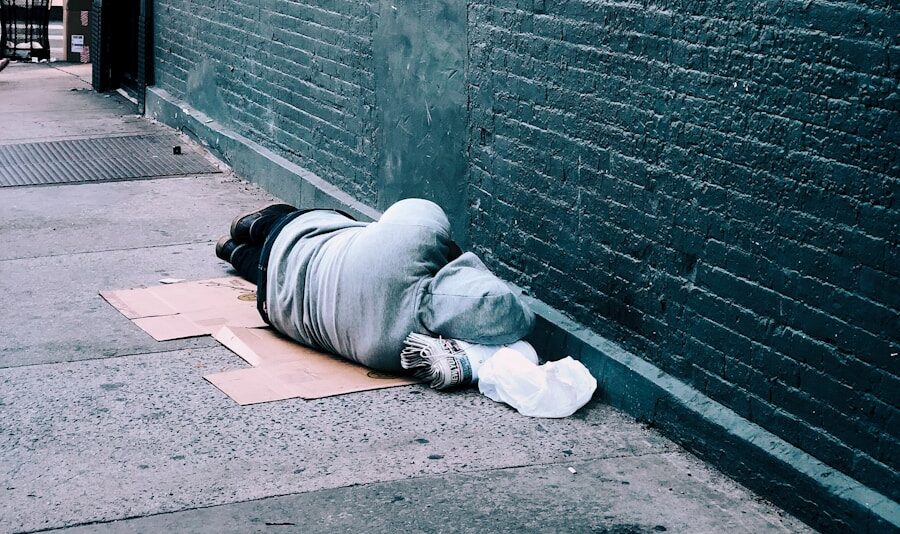
The government has pledged to halve long-term rough sleeping by the end of this Parliament but to get there, they need local authorities to redesign how the system works for people with the most complex needs.
To this end, they have published new guidance which explains how councils should coordinate homelessness services, which will require some councils to produce a Long-Term Rough Sleeping Partnership Plan.
Not every council is required to produce a full Partnership Plan, but all councils must publish action plans showing progress on rough sleeping. A Partnership Plan is specifically required where a council has been awarded money from the Long-Term Rough Sleeping Innovation Programme, or where MHCLG’s adviser has identified the area as having high levels of long-term rough sleeping, either in raw numbers or as a proportion of the total rough sleeping population.
What is the purpose of the plan?
The plan is a local commitment about how the council and its partners will work together to achieve system change. It should demonstrate how new ways of working will be tested, how partnerships will be strengthened, and how models of best practice could eventually be scaled up elsewhere. The plan must align with the existing local homelessness strategy and support performance against the Local Outcomes Framework metrics.
Who should be involved?
The expectation is that the plan should be genuinely collaborative and place-based, involving commissioned and non-commissioned support providers alongside health, social care, housing and community safety partners. Critically, the plan must be co-produced and co-signed by at least one Voluntary, Community and Faith Sector partner. Sign-off is also required from the Health and Wellbeing Board and a named senior lead from the Safeguarding Adults Board. MHCLG’s adviser team will provide support throughout the process.
What should the plan contain?
The plan should tell a coherent story about how long-term rough sleeping will be tackled, covering five main areas.
It should begin with a shared vision and a specific local target for reducing long-term rough sleeping by the end of this Parliament, measured through the long-term rough sleeping metric.
It should then set out how local needs will be identified and resources prioritised. This means partners working together to use intelligence and data from multiple sources to decide which individuals to targett, focusing on those furthest from services and least likely to seek help. Identification should be based on need, not simply on whether someone is currently rough sleeping.
The plan must describe how coordinated, personalised support will be delivered through multi-agency case plans that are regularly reviewed, person-centred and sustained over time, integrating housing, health, social care, substance misuse and community safety services around the individual.
Governance arrangements must also be clearly set out, explaining who monitors progress, how problems are escalated, how case-level data will be tracked, and how the approach will be adapted in light of learning.
Finally, the plan must explain how the council will collaborate with health partners and with prisons and probation. Long-term rough sleeping cannot be resolved without consistent access to GPs, mental health support, and substance use services. On the criminal justice side, housing, health, prison, and probation services should work together to prevent people leaving custody directly into rough sleeping — identifying high-risk individuals early, planning for release well in advance, and considering specialist navigator roles.
What else is required?
Councils will also be asked to complete a systems maturity audit – a self-assessment of how well-developed current systems are for managing long-term rough sleeping. A template is forthcoming, and MHCLG’s adviser team will provide assistance.
Key deadlines
For councils receiving funding through the Long-Term Rough Sleeping Innovation Programme, payments begin in May 2026. The Partnership Plan must be agreed and signed off by 1st December 2026. Missing this deadline may put Year 2 and Year 3 payments at risk.
A final note
Councils are encouraged to reflect on where their system currently stands, where it needs to be, and what it will take to get there. Frontline workforce and people with lived experience of long-term rough sleeping should be meaningfully engaged throughout — their input will make the difference between a plan that sits on a shelf and one that brings about genuine change.
Alison McGovern, Minister of State for Local Government and Homelessness said: ‘Preventing homelessness and tackling its root causes is much more effective than a never-ending crisis response… Delivering this culture change will take time but we want to support local areas to deliver the best possible services for their communities, which is why we are putting in place new guidance and support through these new toolkits.
‘As we make that shift towards prevention, we also need to take action to tackle the most urgent and dangerous forms of homelessness. This means eliminating the use of B & Bs for families, other than very short-term use in emergencies, and halving numbers of people sleeping rough long-term. This is alongside preventing homelessness in the first place, increasing the proportion of people who are supported to stay in their own home or helped to find alternative accommodation.’
In addition to guidance, MHCLG has published a toolkit which can be read here.
Leave a Reply